
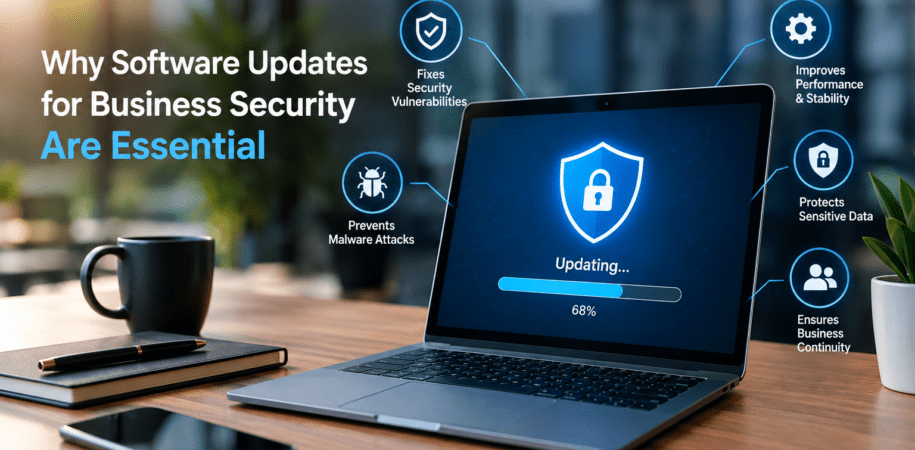

In today’s digital world, businesses depend on software for almost every aspect of their daily operations. From communication and accounting to customer management and cloud services, software keeps modern businesses running. However, using outdated software can create serious security risks. This is why software updates for business security should be an essential part of every company’s IT strategy.
Regular updates do more than add new features or improve performance. They can fix security vulnerabilities, protect business data, improve system stability, and reduce the risk of cyberattacks. For small businesses and large organizations alike, keeping software up to date is one of the simplest ways to strengthen overall IT security.
What Are Software Updates?
Software updates are changes released by software developers to improve an application, operating system, or digital platform. These updates can introduce new features, fix bugs, improve compatibility, and address security vulnerabilities.
When developers discover a security weakness, they may release a security patch to fix the problem. Installing these patches is a key part of software updates for business security because it helps prevent attackers from exploiting known vulnerabilities.
Software updates may apply to:
- Operating systems
- Business applications
- Web browsers
- Mobile applications
- Plugins and extensions
- Cloud applications
- Security software
- Network devices
- Business management platforms
- Website software
Businesses should keep track of all the software used by employees and make sure important security updates are installed promptly.
Why Are Software Updates for Business Security Important?
Cyber threats are constantly changing. Hackers and cybercriminals look for weaknesses in software that can provide unauthorized access to systems and information.
This makes software updates for business security an important part of proactive cybersecurity. Instead of waiting for a security incident to happen, businesses can reduce their exposure by keeping their software current.
Here are some of the biggest benefits of maintaining updated software.
1. Software Updates Fix Security Vulnerabilities
One of the primary reasons software updates for business security are so important is their ability to fix known vulnerabilities.
No software is completely free from security weaknesses. Developers continuously investigate potential vulnerabilities and release patches when problems are discovered.
If a business continues using an outdated version, the vulnerability may remain available for attackers to exploit.
Installing security updates helps close these known security gaps and makes business systems more difficult to compromise.
2. Software Updates Help Protect Business Data
Business data is one of the most valuable assets an organization owns. Companies may store customer information, financial records, employee details, business documents, passwords, and confidential communications.
A security vulnerability in an outdated application can potentially provide attackers with an entry point into a company’s systems.
Using software updates for business security helps businesses reduce unnecessary exposure and protect important information.
However, updates should be combined with other security measures such as encryption, strong passwords, access controls, multi-factor authentication, and secure backups.
3. Updates Can Reduce the Risk of Cyberattacks
Cybercriminals frequently search for vulnerable systems that can be attacked using known security weaknesses.
Outdated applications can make this easier because security vulnerabilities may already be publicly documented.
Regular software updates for business security can help reduce the number of known vulnerabilities present within an organization’s IT environment.
Although updates cannot stop every cyberattack, they can remove many avoidable security weaknesses.
4. Software Updates Can Protect Against Malware
Malware includes various types of malicious software designed to damage systems, steal information, disrupt operations, or provide unauthorized access.
Some malware attacks take advantage of vulnerabilities in outdated applications and operating systems.
This is another reason software updates for business security should be part of a company’s cybersecurity protection strategy.
Keeping software updated can help close vulnerabilities that malware attackers may attempt to exploit.
Businesses should also use endpoint protection, email security, firewalls, employee training, and monitoring to create multiple layers of protection.
5. Updates Improve Overall IT Security
Effective software updates for business security do not work alone. They form one important layer of a broader IT security strategy.
A business can strengthen its cybersecurity by combining updated software with:
- Multi-factor authentication
- Strong password policies
- Firewalls
- Endpoint protection
- Data encryption
- Regular backups
- Access controls
- Security monitoring
- Employee cybersecurity training
- Vulnerability assessments
Together, these measures can create a more secure technology environment.
6. Software Updates Can Prevent Business Disruptions
A cyberattack can cause significant disruption to normal business operations.
Employees may lose access to important applications, files may become unavailable, and customers may experience service interruptions. Recovering from a cybersecurity incident can also require considerable time and resources.
While software updates for business security cannot guarantee that a business will never experience an attack, keeping systems patched can reduce the risk associated with known vulnerabilities.
Preventive IT maintenance is generally easier than recovering from a serious security incident.
7. Updates Improve Software Performance
Security is the biggest reason to prioritize software updates for business security, but updates can provide other benefits too.
Software developers often use updates to fix bugs, improve stability, optimize performance, and introduce useful features.
Updated applications may therefore provide a better experience for employees while also offering stronger security.
8. Updates Help Maintain Software Compatibility
Modern businesses often use dozens or even hundreds of applications and digital tools.
For example, an organization might use cloud storage, accounting software, CRM software, communication platforms, browsers, operating systems, and specialized business applications.
When software becomes significantly outdated, compatibility problems can occur.
Regular software updates for business security can help businesses maintain a more consistent and reliable technology environment.
What Happens When Businesses Ignore Software Updates?
Ignoring updates may seem harmless, especially when employees are busy or businesses want to avoid interruptions.
However, delaying important security updates can increase cybersecurity risks.
Increased Security Vulnerabilities
Outdated software may contain known vulnerabilities that attackers can exploit.
Greater Risk of Data Breaches
A vulnerable application may potentially become an entry point for unauthorized access to sensitive business information.
Increased Malware Exposure
Attackers may use software vulnerabilities to distribute malware or gain access to business systems.
Operational Downtime
A successful cyberattack can interrupt applications, networks, devices, and business processes.
Higher Recovery Costs
Businesses may face significant expenses when responding to security incidents, restoring systems, recovering data, and dealing with operational downtime.
This is why software updates for business security should be treated as a regular IT responsibility rather than an optional task.
Which Software Should Businesses Update?
Businesses should consider updating every application and system that receives security patches from its developer.
Important examples include:
- Windows, macOS, and other operating systems
- Web browsers
- Business applications
- Accounting software
- CRM platforms
- Website CMS platforms
- Plugins and extensions
- Antivirus and endpoint security software
- Cloud applications
- Network equipment
- Mobile applications
- Device firmware
Businesses should maintain an inventory of their software so IT teams can identify outdated applications more easily.
How Can Businesses Manage Software Updates?
A structured update process can make software updates for business security easier to manage.
Create a Software Inventory
Start by identifying all applications, devices, operating systems, and platforms used by the business.
Prioritize Security Patches
Critical security updates should generally receive greater priority than routine feature updates.
Enable Automatic Updates When Appropriate
Automatic updates can reduce the chance of important patches being forgotten. However, critical business systems may require testing before updates are deployed.
Test Important Updates
For essential applications, businesses can test updates before deploying them throughout the organization to reduce compatibility problems.
Monitor Update Status
IT teams should regularly check whether business devices and applications are running supported and updated versions.
Work With IT Professionals
Managing updates across multiple devices and applications can become challenging as a company grows. Professional IT support can help businesses monitor systems, manage patches, identify vulnerabilities, and maintain a stronger cybersecurity environment.
Software Updates Are Not the Only Security Measure
Although software updates for business security are essential, businesses should not depend on updates alone.
A strong cybersecurity strategy should include multiple layers of protection.
Businesses should consider using:
- Secure data backups
- Multi-factor authentication
- Firewalls
- Endpoint security
- Employee security training
- Password management
- Network monitoring
- Data encryption
- Access management
- Disaster recovery planning
- Regular security assessments
Combining these measures with regular software updates can significantly improve a company’s overall security posture.
How Ziffs Can Help With Business IT Security
Keeping every application and device updated can be difficult for businesses that do not have dedicated IT professionals.
Ziffs can help businesses manage their technology environment and develop practical IT security strategies. Professional IT support can assist with software management, system maintenance, security monitoring, vulnerability management, and other essential technology needs.
With the right IT support, businesses can reduce preventable technology risks and create a more reliable environment for employees and customers.
Frequently Asked Questions
Why are software updates for business security important?
Software updates for business security are important because they can fix known vulnerabilities, improve software protection, and reduce the risk of cybercriminals exploiting outdated systems.
Can outdated software put business data at risk?
Yes. Outdated software may contain known security vulnerabilities that attackers can potentially exploit to gain unauthorized access to systems or information.
How often should businesses install software updates?
Businesses should install important security updates as soon as reasonably possible after determining that they are appropriate for their systems. Critical vulnerabilities should generally receive higher priority.
Are automatic updates good for business security?
Automatic updates can be helpful because they reduce the possibility of important patches being forgotten. However, businesses should consider testing updates before deployment when working with critical applications.
Do software updates prevent all cyberattacks?
No. Software updates for business security address software vulnerabilities, but they cannot prevent every type of cyberattack. Businesses also need measures such as MFA, backups, firewalls, endpoint protection, and employee training.
Why should small businesses prioritize software updates?
Small businesses can also be targets for cyberattacks and may hold valuable customer and financial information. Regular updates help reduce vulnerabilities and strengthen their overall IT security.
Final Thoughts
Software updates for business security are a fundamental part of protecting modern businesses. Regular updates can fix vulnerabilities, improve software stability, protect important data, and reduce exposure to known cyber threats.
Businesses should make software maintenance part of their ongoing cybersecurity strategy. Instead of treating updates as an inconvenience, organizations should view them as an essential investment in IT security and business continuity.
By keeping software updated and combining patches with strong cybersecurity practices, businesses can build a safer, more reliable, and more resilient technology environment.